
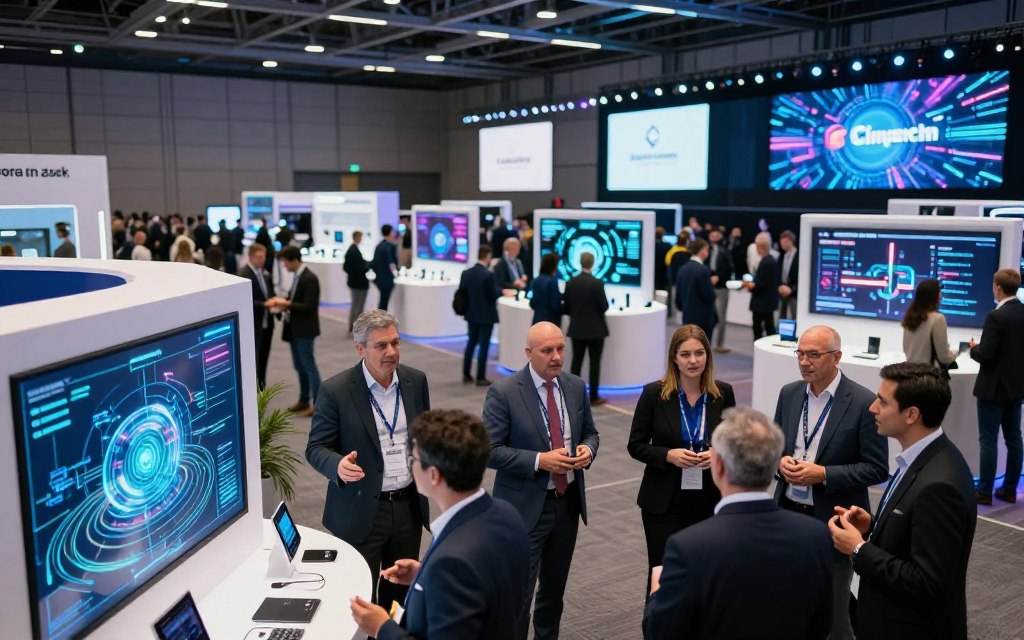

The Hello Tomorrow Global Summit is the top event for cutting-edge innovation worldwide. It’s known as Deep Tech Week. Here, the future of tech is shaped and discussed.
This summit brings together top talent. Nobel laureates, startup founders, venture capitalists, and industry leaders all meet. They aim to turn groundbreaking science into real, impactful businesses.
The event is highly respected, backed by top endorsements and international praise. It’s the key place for those serious about tech progress. The talks and connections made here shape the next big changes in industries and society.
What is Deep Tech Week?
Deep Tech Week is more than just an innovation conference. It’s a special experience that helps grow the deep tech world. It’s the main event of the Hello Tomorrow foundation. It brings together scientists, entrepreneurs, and investors to shape the future.
The 2026 event will be held in Amsterdam 2026. From 8-12 June, Amsterdam will buzz with new ideas and connections. It’s a key event for the global community, filled with inspiration, insights, and opportunities to make deals.
Deep Tech Week has three main parts. Each part plays a key role in the innovation journey. Together, they help ideas grow into real investments.
| Core Component | Primary Focus | Key Participants |
|---|---|---|
| The Main Summit | Visionary keynotes, deep-dive thematic tracks, and exhibition of groundbreaking technologies. | All delegates, startups, corporates, and academics. |
| Investor Day | Facilitated one-on-one meetings between high-potential startups and global investors. | Pre-selected startups and verified venture capital firms. |
| Financing the Future Forum | Exclusive, closed-door discussions on the future of deep tech capital and fund structuring. | General Partners (GPs) and Limited Partners (LPs) only. |
This setup offers great value to everyone. The main Summit brings new ideas and trends. Investor Day turns those ideas into real talks. The “Financing the Future” forum then shapes how we invest in the future.
Deep Tech Week is where we plan for tomorrow. It’s a key event for those serious about using deep science to tackle big challenges.
The Mission Behind the Global Summit
Deep Tech Week is more than just a conference. It’s a global movement with a clear mission. It aims to use breakthrough technologies to solve humanity’s biggest challenges. It works to speed up innovation for issues like climate change and better healthcare.
The event combines science meets business in a unique way. It aims to link lab discoveries with practical uses. This requires a strong, working ecosystem that brings together researchers, investors, entrepreneurs, and policymakers.
“Our collective aim must be to drive innovation towards meaningful outcomes for people and the planet.”
The summit is not just about talking. It’s about creating real partnerships across the innovation chain. It’s about turning deep science into useful products and sustainable businesses.
The ultimate goal is to create a stronger, more independent future. Deep Tech Week is where this ecosystem comes together. It’s where the next big breakthrough technologies will make a global difference.
Why Deep Tech Week Matters for Global Innovation
Deep Tech Week is key because it tackles the biggest challenges facing industries and countries. It’s a place where the world sets its innovation goals. It focuses on important areas like Resilience & Sovereignty and Sustainability & Climate.
These themes are real and changing how businesses compete. They cover everything from clean energy to new medicines. The ideas discussed here will guide the next 10 years.
The summit brings together over 3000 leaders, investors, and innovators. This gathering of industry leaders makes the event a hub for real change. It’s where thought leadership and corporate innovation come to life.
A leading venture capitalist said,
“The partnerships formed here are fast and strategic. They outdo solo R&D efforts.”
Deep Tech Week is the spark that individual efforts need. It brings together progress to create shared goals. For deep tech leaders, attending is not just a choice; it’s a must for a strong future.
The Thematic Heart of the Summit
The summit has different tracks for deep technology. These tracks focus on key areas. This makes it easy for people to find what they’re interested in.
Vertical tracks look at breakthroughs in specific sectors. These are changing whole industries:
- Energy: This track looks at new ways to make renewable energy. It also talks about smart grids and climate tech to cut down carbon emissions.
- Healthcare: It covers new things in biotech and digital health. It shows how engineering biology is changing medicine.
- Food & Agriculture: This part talks about making farming better. It looks at sustainable farming and new ways to make food.
- Advanced Computing & Electronics: It looks at the latest in computer hardware and software. This includes new semiconductors and AI systems.
There are also horizontal tracks. These cover strategies for bringing deep tech to market:
- Corporate Deep Tech Strategy: Helps big companies work with new technologies.
- Investor Insights: Shows how to fund and grow deep tech startups.
- Startup Journey: Gives tips for founders on growing their business. It’s great for deep tech startups.
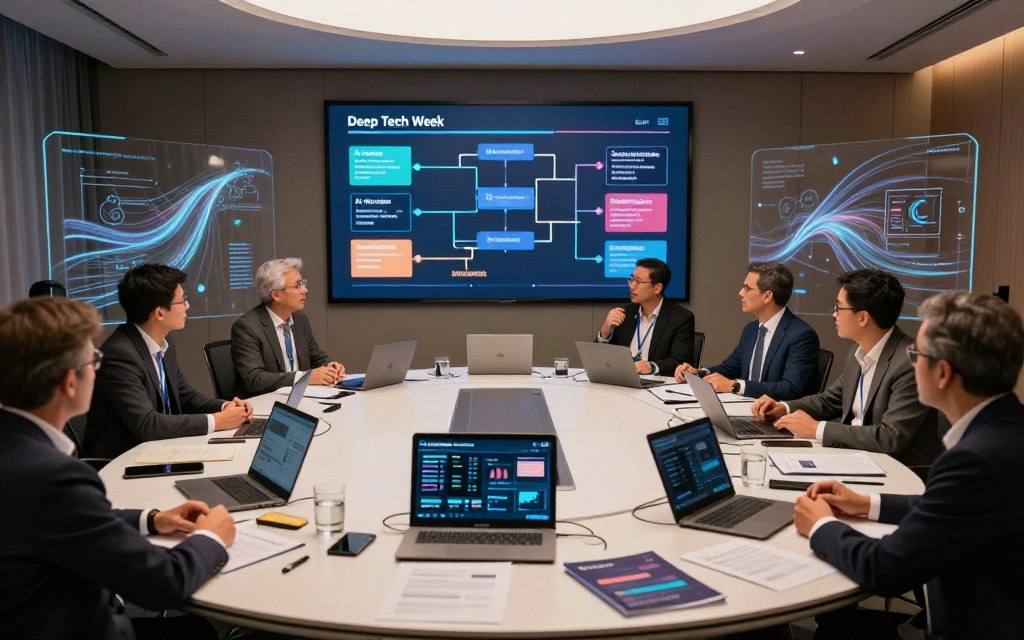
This setup makes sure the summit covers everything. People can dive into the tech and also learn about business and strategy.
Whether you’re looking for climate tech solutions, investment advice, or growing your startup, Deep Tech Week is for you. It connects science with real-world changes.
Artificial Intelligence: Reshaping Industries and Society
At Deep Tech Week, we dive deep into artificial intelligence. We look at its real-world changes, not just the buzz. We explore its current uses, the ethics behind it, and how it fits into our world.
The State of Generative AI and Large Language Models
Generative AI has grown a lot. Today, it can solve complex problems and spark new ideas. It looks at huge amounts of data to find patterns we can’t see.
This skill is leading to new discoveries and creative works.
Beyond Chatbots: Creative and Scientific Applications
The summit shows AI’s uses go beyond talking to us. In biotech, AI designs new proteins for medicines. In materials science, it predicts what new compounds will be like.
In creative fields, AI helps with designs and music. This marks a big change from just analyzing to actually creating.
Implementing Ethical and Robust AI Systems
As AI’s impact grows, so does the need for it to be used right. Experts like Sabrina Maniscalco of Algorithmiq talk about strict standards. They aim to make AI fair, open, and safe for everyone.
Frameworks for Governance, Bias Mitigation, and Safety
Creating global rules is a big topic. Talks focus on making rules for checking algorithms and avoiding bias. Safety research aims to make AI predictable and in line with human values.
This is key to keeping trust and avoiding harm.
| Framework | Primary Focus | Key Mechanism | Stage of Adoption |
|---|---|---|---|
| EU AI Act | Risk-based Regulation | Conformity Assessments & Bans | Legislative |
| IEEE Ethically Aligned Design | Technical Standards | Voluntary Certification | Industry Guidance |
| NIST AI Risk Management Framework | Organisational Governance | Voluntary Self-Assessment | Emerging Best Practice |
| OECD AI Principles | International Policy | Multi-stakeholder Dialogue | Global Consensus |
AI’s Role in Industrial Automation and Optimisation
AI is changing how we work. It makes factories run better, saving resources and energy. It also manages big supply chains, spotting problems before they start.
In energy, AI helps balance what we use and what we make. This makes using green energy easier. Many see this as AI’s Sputnik moment for the physical world.
Quantum Computing: Unlocking Unprecedented Power
Quantum computing has moved from theory to reality. It’s now a key topic at Deep Tech Week. Leaders are exploring how it will change problem-solving in many fields.
Progress Towards Quantum Advantage
The main goal is to reach quantum advantage. This means a quantum computer will do better than the best classical computer. The race is driving fast progress in hardware.
Milestones in Hardware: Superconducting Qubits and Ion Traps
Two main types of technology are getting a lot of attention. At the summit, experts talked about the latest breakthroughs:
- Superconducting Qubits: Big companies are working on more qubits and better performance. They’re focusing on fixing errors and growing these systems for reliable use.
- Ion Traps: Known for their stability and accuracy, ion traps are moving towards modular, networked quantum processors.
The Evolving Quantum Software and Algorithm Ecosystem
Great hardware needs top-notch software. A big change is happening in quantum algorithms and tools. These are designed to use the new power.
Implications for Cryptography, Material Science, and Logistics
The possible uses are huge and were a big topic:
- Cryptography: Quantum computers could break current encryption, leading to a fast move to post-quantum cryptography to keep data safe.
- Material Science: Quantum simulation could change drug discovery and materials design. It can model molecular interactions at an atomic level, something classical computers can’t do.
- Logistics: New algorithms could solve complex problems in routing, scheduling, and supply chains. This could lead to big improvements in efficiency and cost savings for industries worldwide.
Deep Tech Week shows quantum computing is no longer just a dream. It’s becoming a reality with big business impacts soon.
Biotechnology: Engineering the Future of Health
The biotechnology track at Deep Tech Week showed us a future where health and sustainability go hand in hand. It brought together cutting-edge lab science with practical applications. These applications aim to change medicine, agriculture, and how we make things.
Advances in Gene Editing and Therapeutic Platforms
The summit marked a new chapter in genetic medicine. It’s no longer just about discovering new things. Now, we’re working on making powerful editing tools safe and effective for treating diseases.
CRISPR and Next-Generation Genetic Tools
CRISPR-Cas9 is a big deal in gene editing, but there’s more. Scientists like George Church talked about new systems. These systems, like base and prime editing, can make precise changes without harming the DNA too much.
These new tools are better at avoiding mistakes, which is key for safety. Innovators, like Janice Chen, are using AI to improve these systems. This makes it faster to turn ideas into treatments.
The Rise of Personalised and Predictive Medicine
Healthcare is changing from treating everyone the same to treating each person as an individual. This change is thanks to genomics, big data, and AI.
Leveraging Data for Tailored Diagnostics and Treatments
AI can look at a person’s genes, proteins, and lifestyle to predict health risks. This lets us prevent diseases before they start. For people already sick, AI helps create treatments that work best for them, reducing side effects.
The Medical Biotech Demo Day showed how these ideas are becoming real. We saw AI helping find new drugs and tests that can find cancer early without surgery.
Sustainable Bio-manufacturing and Agri-tech
Biotechnology’s impact goes beyond health. It’s also about making things better for the planet. A big part of this is using biology to replace old, harmful ways of making things.
- Cellular agriculture: Making real meat and dairy from cells, which is better for the environment.
- Bio-based materials: Creating plastics and fabrics that can break down naturally.
- Agricultural tech: Growing crops that are healthier, use less water, and need fewer fertilisers.
These ideas were a big part of the Food & Agriculture track. They show how biotechnology is key to a sustainable future and feeding the world.
Sustainable Technology: Solutions for a Greener Planet
From capturing carbon to reinventing the grid, sustainable technology is changing fast. It’s driven by new materials and digital smarts. Deep Tech Week’s Sustainability & Climate theme shows us how to make a difference.
Innovations in Carbon Capture, Utilisation, and Storage (CCUS)
We need to remove old emissions from the air to reach net-zero. Carbon capture tech is moving from small tests to big, working systems. Now, we’re working on better ways to capture and store carbon.
Using captured CO2 for new products is also a big area. This turns it into fuel, chemicals, or building materials. Investors like Gaetan Bonhomme of Breakthrough Energy Ventures will talk about making these techs work in the real world.
Breakthroughs in Energy Storage and Grid Management
Renewable power needs better energy storage. Solar and wind are not always on. We need to store power for longer periods. This keeps the grid stable and secure.
Experts like Professor Shirley Meng are leading this effort. They’re working on new battery types for different needs. This goes beyond just lithium-ion batteries.
Solid-State Batteries and Long-Duration Storage
Solid-state batteries could make electric cars and gadgets better. They’re safer, hold more energy, and charge faster. For the grid, new storage like flow batteries can keep power flowing for a long time.
These advances are more than just better batteries. They’re building a strong, smart energy system for a green future.
Circular Economy Models and Smart Resource Management
We need to rethink how we make and use things. Circular economy models aim to use resources forever, not just once. This means advanced recycling and new materials that are easy to recycle.
It also means using digital tools to manage resources better. AI and IoT help use water, energy, and materials wisely. This approach turns waste into something valuable.
The Deep Tech Week Experience: Beyond the Lectures
Deep Tech Week is more than just talks. It’s a place for hands-on learning and networking. It turns passive listening into active doing, where ideas meet action.
Learning from Global Pioneers and Thought Leaders
Attendees get to meet the minds shaping our tech future. The summit features experts who are not just talking but also doing. They’re building the next big tech breakthroughs.
Spotlight on Notable Keynote Speakers and Their Insights
Past and present keynote speakers include pioneers like Professor Shirley Meng. She talks about the future of energy storage. Matthew Jones shares insights on quantum algorithms, and Rajesh Swaminathan talks about industrial AI scaling. Their talks offer unique, forward-looking views.
The most profound innovations happen at the intersection of disciplines. Events like this are key for cross-pollination.
These talks are not just about trends. They offer real roadmaps and lessons from the edge of research and business.
Forging Valuable Connections
The summit is designed to help people make meaningful connections. It’s a top networking event for innovators, investors, partners, and peers.
Structured Networking, Investor Pitch Sessions, and Startup Exhibitions
A special app helps delegates plan meetings in advance. This makes networking more efficient. Investor Day is intense, with founders pitching to venture capitalists.
The startup exhibition is a highlight, with over 80 companies showing off their work. This space is full of energy, with products sparking conversations that could lead to funding or partnerships.
| Connection Format | Primary Focus | Key Feature |
|---|---|---|
| Structured Networking | Building peer-to-peer and mentor relationships | Pre-scheduled meetings via dedicated app |
| Investor Pitch Sessions | Securing funding and strategic advice | Direct feedback from top-tier VC panels |
| Startup Exhibition | Showcasing innovation and attracting partners | 80+ live demos and prototype interactions |
| Interactive Workshops | Skill development and collaborative problem-solving | Hands-on sessions led by industry experts |
Interactive Workshops and Collaborative Problem-Solving
These sessions are hands-on, not just lectures. Masterclasses on topics like ethical AI or quantum software development challenge attendees to apply what they learn.
Workshops tackle real industry challenges. They often lead to new partnerships or project ideas. This format ensures knowledge turns into real skills.
How to Engage with Deep Tech Week
Starting your journey into deep tech innovation is easy. You can choose to attend as a delegate, exhibit as an innovator, or join virtually. Each option gives you a unique way to connect with the latest tech trends.
Securing Your Attendance as a Delegate
Attending the summit in Amsterdam puts you at the heart of deep tech. The event is designed for different professionals, ensuring you get the most out of your time.
Navigating Registration, Ticket Options, and Travel
Registering is simple through the summit’s official website. There are various ticket passes, each with its own benefits for different attendees.
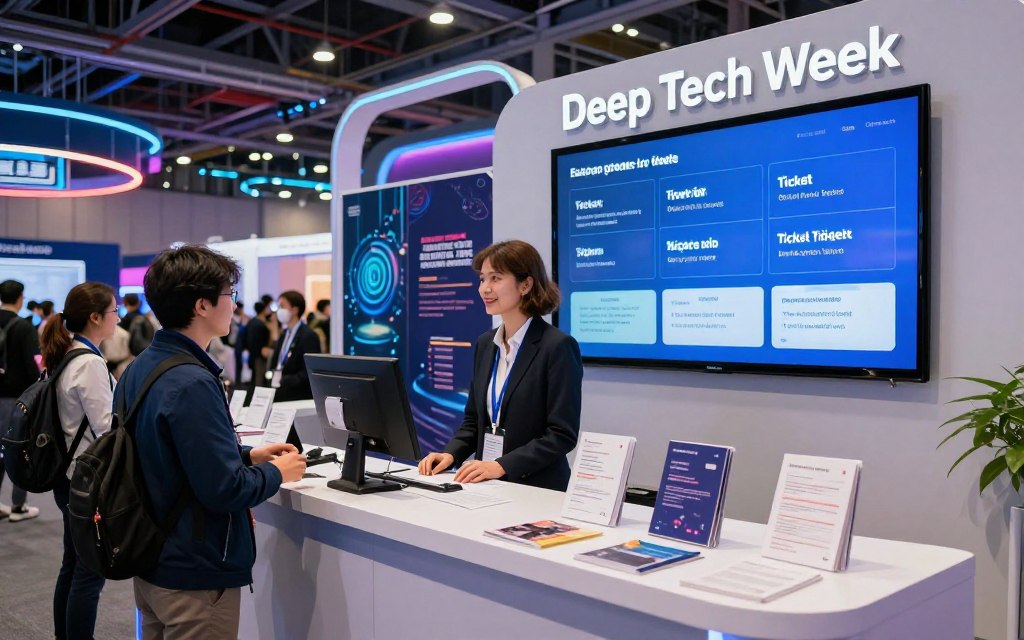
Book early as passes sell out quickly. For those coming from abroad, the summit offers discounted hotel rates. Amsterdam’s public transport makes getting to the venue easy.
The table below shows the main ticket types, their benefits, and prices.
| Ticket Category | Key Benefits | Ideal For |
|---|---|---|
| Corporate Pass | Full summit access, exclusive corporate roundtables, early startup investment lists | Executives from large enterprises |
| Investor Pass | Priority access to startup pitches, investor-only lounges, curated founder meetings | Venture capital and CVC professionals |
| Startup Pass | Showcase opportunities, pitching sessions, mentorship meetings | Founders and early-stage teams |
| Student/Academic Pass | Discounted access to lectures and exhibitions, career fair entry | Students and researchers |
| Media Pass | Press conferences, speaker interviews, dedicated working area | Journalists and analysts |
Opportunities for Exhibitors and Innovators
Deep Tech Week is a great chance for startups and innovators to shine. It’s a chance to meet investors, partners, and customers.
Guidelines for Showcasing Your Technology or Startup
There are more than just exhibition spaces available. You can choose from:
- General Partnership: Brand visibility across summit materials and digital channels.
- Exhibition Package: A physical booth in the innovation hall to demo your technology and engage attendees.
- Speaking Engagement: A curated slot on a thematic stage to present your vision to a targeted audience.
When preparing, focus on a clear value proposition. An effective investor pitch, simple technical explanations, and real prototypes attract interest. The summit’s tools help you meet with venture capital firms and corporate buyers.
Maximising the Virtual Participation Pathway
Not everyone can attend in Amsterdam. The summit’s digital platform makes it accessible worldwide.
Accessing Live Streams, Digital Networking, and On-Demand Content
A virtual ticket pass gives you full access from home. You can watch live sessions and interact with speakers.
Digital networking tools help you connect with others. You can even get introductions to people at the event.
The biggest advantage is the on-demand content library. You can watch any session later, so you don’t miss out.
This way, you can join the deep tech community’s key discussions, no matter where you are.
The Lasting Impact and Legacy of the Summit
The summit’s impact is felt long after it ends. It acts as a constant driver for the global deep tech world. Its legacy is built on real outcomes that go beyond the event itself.
Every summit leads to big deals, partnerships, and investment rounds. These connections grow into collaborations that solve real problems. The event is not just for talks; it’s where new tech breakthroughs start.
The Hello Tomorrow Challenge startup pipeline is a key part of this legacy. It finds and boosts top deep tech startups. Winners get huge exposure. A past ‘Deep Tech Pioneer’ said:
“The exposure and direct access to investors at Deep Tech Week were transformative. It was the critical link that secured our Series A funding and key pilot partnerships.”
This pipeline shapes what venture capital firms invest in. It also guides corporate innovation plans of big companies. The summit shows the future of science and tech, helping money find the best projects.
So, Deep Tech Week is more than just an event. It’s a yearly boost to progress. It makes today’s talks into tomorrow’s funded companies and solutions, keeping its place in the future.
Shape the Future at Hello Tomorrow’s Deep Tech Week
Artificial intelligence, quantum computing, biotechnology, and sustainable technology are changing the world. They offer a chance to transform many areas of life. We need a place where experts can talk and work together.
Hello Tomorrow’s Deep Tech Week is that place. It’s a global summit that brings together science and business. Here, pioneers, investors, and researchers meet to make a difference.
This event is special because it offers deep insights and a chance to meet people from different fields. You’ll learn how to use new technologies in your work.
Being part of this event is key to shaping the future. Make sure to join us at the Deep Tech Week summit in Amsterdam. Let’s create tomorrow’s solutions together.
FAQ
What exactly is Deep Tech Week?
Deep Tech Week is a global summit by Hello Tomorrow. It brings together scientists, founders, investors, and corporate leaders. They work together to turn new research into real solutions.
The event is more than a conference. It includes the Summit, Investor Day, and the “Financing the Future” forum. The 2026 edition will be in Amsterdam from 8-12 June.
Who should attend Deep Tech Week?
It’s for those leading in science and tech innovation. This includes startup founders, investors, corporate leaders, and researchers. It’s for setting agendas, forming partnerships, and learning about new breakthroughs.
What are the main thematic tracks covered at the summit?
The summit covers vertical and horizontal themes. Verticals include Energy, Healthcare, and Advanced Computing. Horizontal tracks are about Corporate Strategy and the Startup Journey.
This ensures a wide range of topics. Attendees can choose what interests them most.
How prominent is Artificial Intelligence in the summit’s agenda?
AI is a major focus. It’s not just about chatbots but also drug discovery and creative industries. There’s a big focus on trustworthy AI and its practical uses.
Experts from Google DeepMind and OpenAI will lead debates. They’ll talk about AI’s impact on manufacturing and energy grids.
Will quantum computing be discussed, and at what level of technical detail?
Yes, quantum computing is a key topic. Sessions aim to explain it in a way that’s easy for business people to understand. They’ll cover the latest in hardware and software.
Expect discussions on quantum advantage, new algorithms, and their impact on encryption and molecule simulation.
What types of networking and connection opportunities are available?
Networking is a big part of the event. There’s a networking app for meetings, Investor Day, a startup exhibition, and workshops. It’s designed for both planned and spontaneous connections.
With over 3000 attendees, it’s a chance to meet international leaders and innovators.
How can my startup exhibit or secure a speaking slot at the event?
Startups can apply through the Hello Tomorrow website. The Deep Tech Pioneers competition offers a chance to showcase globally. Winners often get featured prominently.
For speaking, submit proposals to the content committee. They look for cutting-edge research and unique perspectives.
What ticket options are available, and what do they include?
There are various delegate passes, including Corporate, Investor, Startup, and Academic. Each offers different benefits, like access to side-events and priority meetings. Details are on the summit’s registration page.
Is there a virtual participation option for those who cannot travel?
Yes, there’s a virtual option. Remote attendees can watch live streams, connect with others, and access content later. It makes the summit accessible worldwide.
What is the long-term impact or legacy of attending Deep Tech Week?
The summit’s impact is seen in deals, partnerships, and investments. It boosts startups and shapes investment strategies. It’s not just an event but a driving force for innovation.


 By
By